
Overview
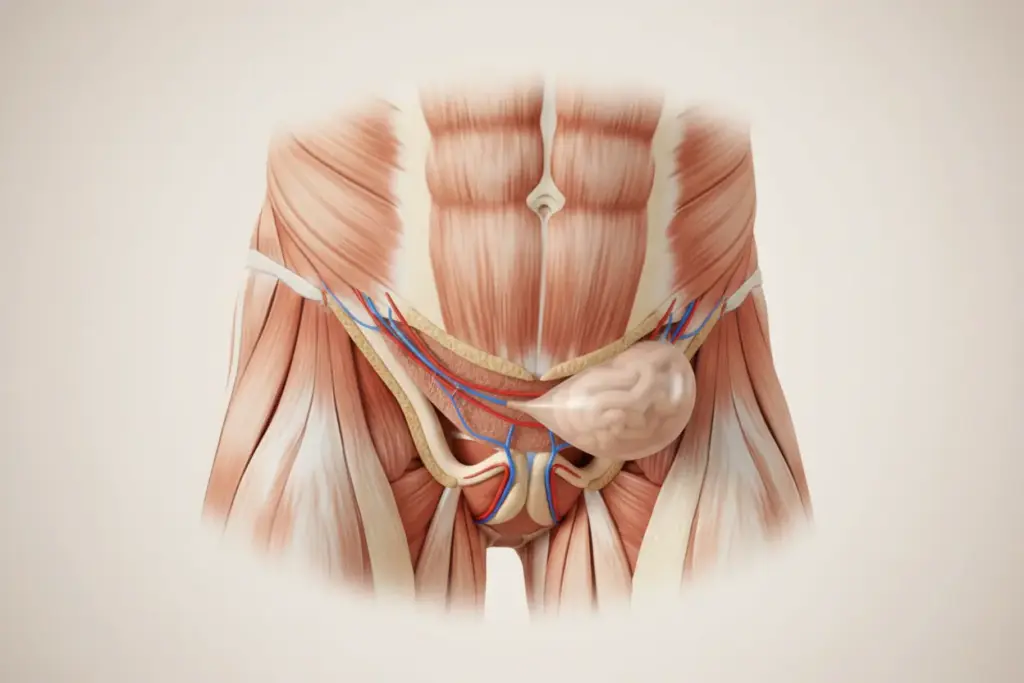
An inguinal hernia develops when tissue often part of the bowel or fatty lining pushes through a weakness in the groin muscles. It is the most common type of hernia and is more prevalent in men. Mr Woodward offers open repair, laparoscopic keyhole surgery, mesh repair, non-mesh suture techniques, and hernia repair under local anaesthesia, giving each patient a genuinely personalised surgical plan.
Conditions Treated
- Primary inguinal hernia (first occurrence)
- Recurrent inguinal hernia
- Bilateral inguinal hernia (both sides)
- Inguinal hernia with pain or discomfort
- Inguinal hernia in high-risk patients
The Procedure
The repair involves returning the protruding tissue to its correct position and reinforcing the weakened muscle wall. Mr Woodward selects the most appropriate technique for each patient: laparoscopic repair uses small incisions and a camera for precision; open repair allows direct access and is preferred in some recurrent or complex cases. Where appropriate, the procedure is carried out under local anaesthesia, avoiding the risks associated with general anaesthetic entirely.
Recovery & Aftercare
Most patients return home the same day. Light activity can typically resume within one week, with a full return to normal life within two to four weeks depending on the technique used. Mr Woodward provides a detailed post-operative plan and remains accessible throughout the recovery period should any concerns arise.
Frequently Asked Questions
How should I prepare for surgery?
You will receive a full pre-operative briefing. Mr Woodward will advise on fasting, medications, and what to bring on the day.
Will I have pain after the operation?
Mild discomfort is normal for a few days. Pain relief will be prescribed and most patients manage well at home without difficulty.
When can I return to work and normal activities?
Most patients return to desk-based work within two weeks and resume full activity within four to six weeks of surgery.