
Overview
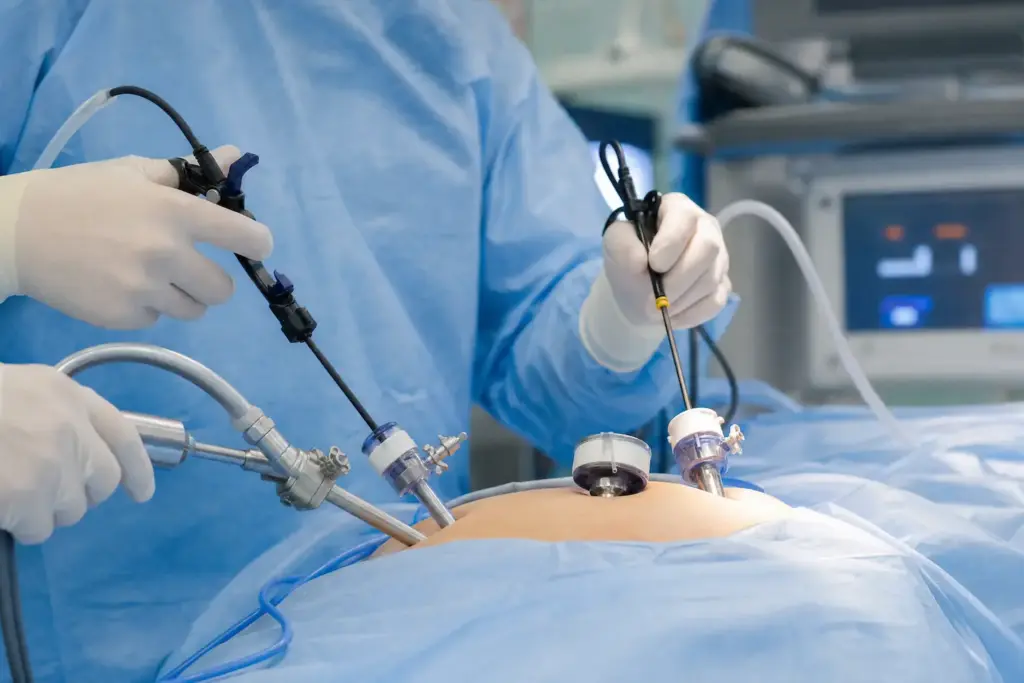
Laparoscopic hernia repair is a minimally invasive surgical technique in which the hernia is corrected through small incisions using a camera and fine surgical instruments. Because the muscle wall is approached from the inside, tissue disruption is significantly reduced compared with open surgery. Mr Woodward is an experienced laparoscopic surgeon and uses this approach for a wide range of primary and recurrent hernia cases.
Conditions Treated
- Primary inguinal hernia
- Recurrent inguinal hernia
- Bilateral inguinal hernia
- Femoral hernia
- Umbilical and ventral hernia
The Procedure
Under general anaesthesia, Mr Woodward makes three small abdominal incisions. A camera is inserted to give a clear view of the defect, and surgical instruments are used to return the tissue and reinforce the area with a lightweight mesh. The approach reduces disruption to the surrounding muscles, resulting in a more comfortable and faster recovery when compared with traditional open surgery.
Recovery & Aftercare
The majority of patients are discharged on the same day as their procedure. Post-operative discomfort is typically mild and well managed with standard pain relief. Most patients return to light work within one week and resume unrestricted activity within four to six weeks. Mr Woodward provides full written aftercare instructions and follow-up support.
Frequently Asked Questions
Am I suitable for laparoscopic repair?
Suitability depends on the hernia type, your general health, and surgical history. Mr Woodward will assess this thoroughly at consultation.
Is laparoscopic surgery safe for hernias?
Yes. Laparoscopic hernia repair is a well-established procedure with an excellent safety record and consistently positive patient outcomes.
How does recovery compare to open surgery?
Recovery is generally faster. Most patients experience less discomfort and return to normal activities sooner than with traditional open repair.